


Titanium Alloy Breakthrough: Revolutionizing Medical Implants with 3D Printing
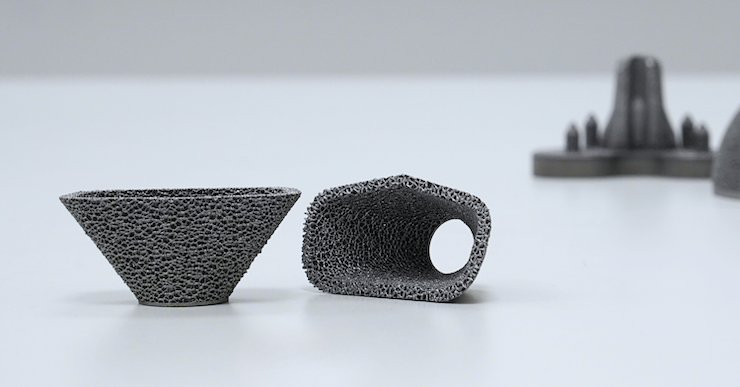
Researchers have made significant strides in using a titanium-based alloy for medical applications. Specifically, they focused on Ti60-Zr15-Cu17-S8 alloy. This alloy demonstrates promising potential for Laser Beam Powder Bed Fusion (PBF-LB) Additive Manufacturing. The study reveals a new pathway for creating advanced medical components.
Advancing 3D Printing with Optimized Alloy Powders
The team utilized the rePowder ultrasonic atomiser from Amazemet Sp Zoo. This tool produced spherical, flowable powders with a crystalline microstructure. These powders are essential for PBF-LB Additive Manufacturing. The atomization process created powders ideal for complex 3D-printed medical parts. Consequently, this innovation opens doors for more intricate and customized medical solutions.
Unveiling Microstructures for Tailored Medical Applications
Researchers used Transmission Electron Microscopy (TEM) and X-ray Diffraction (XRD) analyses. These analyses identified amorphous microstructures on laser-treated surfaces. Scanning Electron Microscopy (SEM) and Energy Dispersive X-ray (EDX) analysis further detailed the relationship between crystalline phase formation and melt pool dynamics. Therefore, this understanding enables the production of dense bulk samples. These samples are tailored for specific medical needs. SuperMetalPrice reports that this research will drive further study into titanium-based sulfur-containing bulk metallic glasses (BMG).
Future Directions in Alloy Processing
The research team aims to optimize powder material purity. They also seek to enhance in-situ crack stability. Maintaining the amorphous nature of the material remains crucial. Further studies will explore pre-heating temperatures and optimized scan strategies. Additionally, researchers will investigate laser-material interaction. Both experimental and computational approaches will be used. Moreover, the team sees potential for adapting this process to other materials with similar glass-forming abilities.


Leave a Reply
You must be logged in to post a comment.