


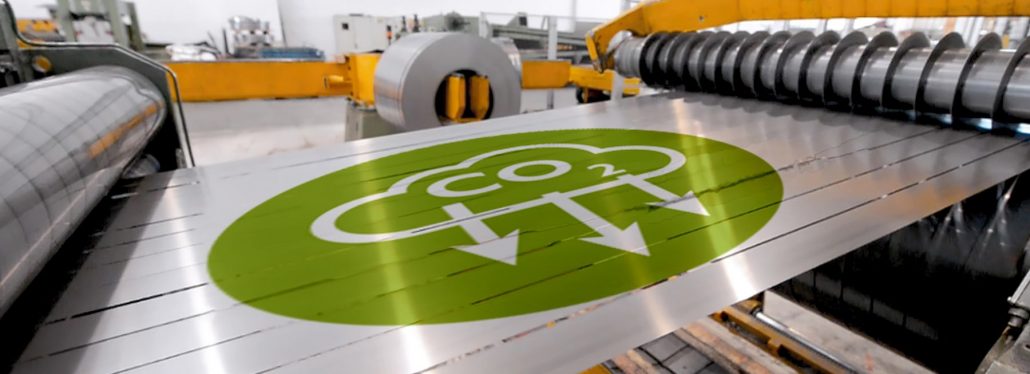
The European Union Emissions Trading System drives cost convergence between conventional and lower-emission steel production. Free carbon allowances phase out steadily. Conventional blast furnace-basic oxygen furnace producers face mounting emission costs. The European Commission proposed a gradual carbon market tightening after 2030. This raises questions about how moderated policies influence green steel investments, cost parity timelines, and European industrial competitiveness.
Policy Moderation and Delaying Cost Parity
Initially, current EU ETS baseline rules project higher carbon allowance prices toward 2035. Consequently, this pushes conventional steel production costs sharply upward. Furthermore, natural gas and hydrogen-based direct reduced iron electric arc furnace operations reach natural cost parity in the early 2030s. However, the Commission’s policy moderation scenario introduces a softer regulatory trajectory. As a result, lower allowance prices keep conventional steel cheaper for a longer duration. Moreover, this pushes cost parity further into the future. Finally, near-zero emission producers command green premiums, whereas operating margins shrink without strong public support.
Output Shifts and Investment Uncertainty
Diverging carbon allowance prices create stark differences in long-term output forecasts for European mills. Combined production volumes for low-emission flat steel drop in a moderation scenario. Consumer demand cannot offset the narrower cost advantage. Hydrogen-based DRI-EAF projects show high sensitivity to this adjustment. Their forecast output drops considerably by 2035. Conversely, conventional production retains a larger market share. This highlights a direct trade-off between rapid industrial decarbonization and regional manufacturing competitiveness.
Balancing Decarbonization and Competitiveness
Aggressive carbon price trajectories provide strong regulatory incentives for low-carbon steelmaking. They accelerate the reduction of average emission intensity across European supply chains. However, this path places severe financial strain on traditional steelmakers. It raises concerns over domestic plant closures and imported semi-finished materials. The Commission proposed complementary support mechanisms to mitigate these risks. These include an Industrial Decarbonisation Bank and targeted investment boosters. Financial success depends on final legislative agreements and effective transition funding allocation.

Market Impact
○ Impacted Metals: Hot Rolled Coil, Pig Iron, Scrap Steel, DRI, Ferroalloys
○ Direction: Uncertain
○ Time Horizon: 2030–2035
○ Affected Industries: Steel Manufacturing, Automotive, Construction, Industrial Machinery, Renewable Energy
○ Related Price Reports: Stainless Steel Weekly Price Report
○ Watch Item: Monitor the European Commission’s legislative debates and final voting outcomes regarding the revised EU ETS linear reduction factor and allowance allocations.
SuperMetalPrice Commentary:
A softer carbon price trajectory relieves immediate cost pressures on European blast furnaces but dampens the commercial urgency required for green steel investments. Steelmakers and procurement managers must carefully evaluate how policy delays will affect long-term scrap demand and low-emission project financing.

Leave a Reply
You must be logged in to post a comment.